


 VERONA, a graduate of the Academy of Fine Arts in Warsaw. Between 2008 and 2010, as part of the Japanese government's MEXT scholarship, she conducted research work at Tama Art University in Tokyo on the combination of painting and interior design elements in the Japanese idea of the room screen. During this time, influenced by the material culture of Japan, she abandoned the color-geometric abstraction she had been practicing so far in favor of figurative painting, which is a sought-after combination of decorativeness and depth of meaning.
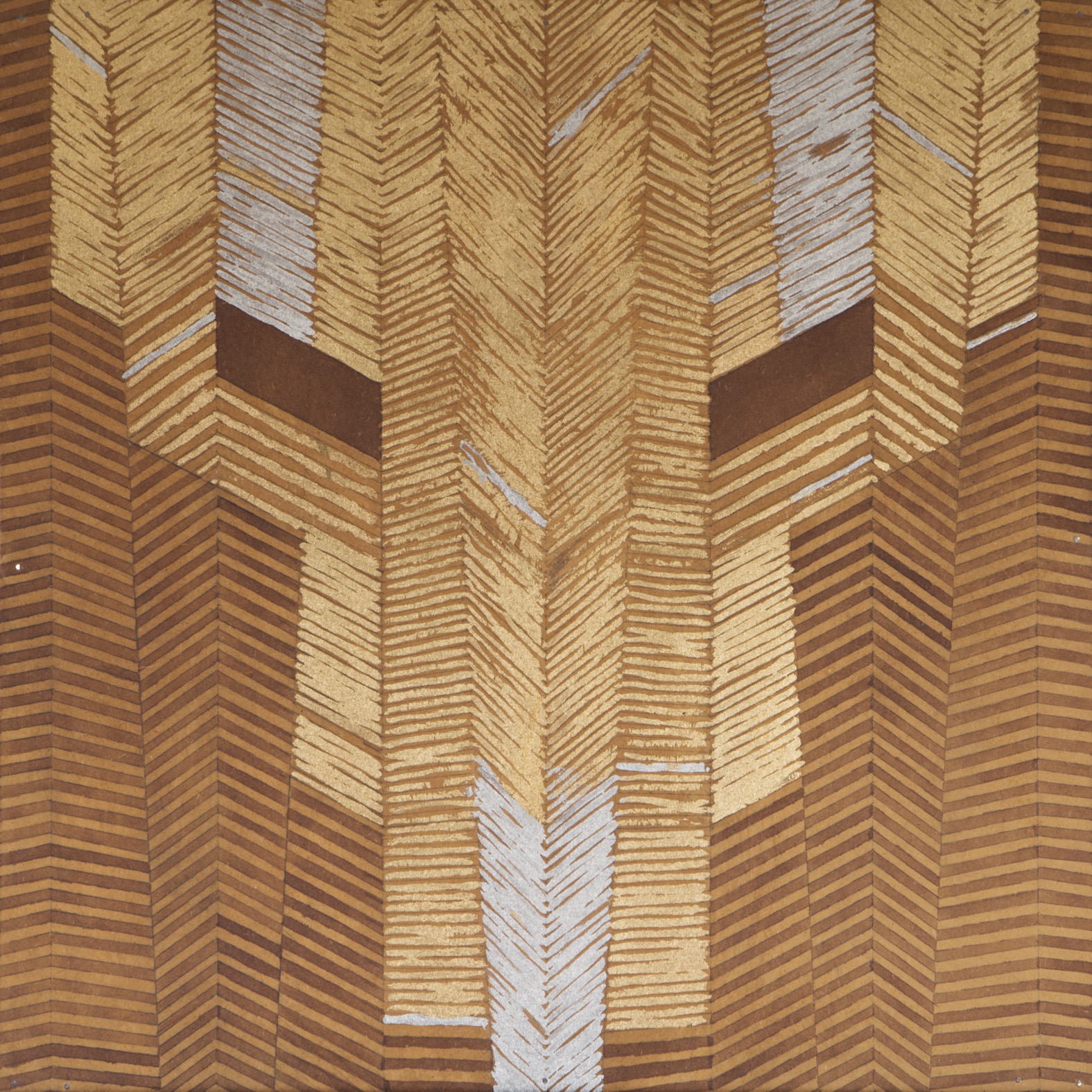
The fusion of the Eastern and Western worlds has taken place not only on the thematic level, but also on the formal and material level. Despite the fact that the paintings are mostly done in Western oil technique, the artist has adopted the formal solutions of Japanese ukio-e woodcuts: patches of a limited color palette are surrounded by a line, and the drawing itself is simplified to the maximum.
Wood is used as a substrate - a sub-image typical of religious painting of the eastern part of the Western world. The artist decided on this different form of cellulose, since paper, typical of Japanese painting, tolerates oil paints badly and cannot be exhibited unframed, and simplicity of form is very important for the paintings as a whole.
From Eastern Church painting is taken the hieratic and, as it were, the "codification of poses" that the depicted persons, animals, plants or objects can assume.
Over time, the plywood or HDF substrate began to appear as part of the color palette, followed by dense floral and geometric patterns - solutions also picked up in classical Japanese woodcuts.
Another motif linking the worlds of Eastern and Western painting, and another formal and material solution introduced in the works, is the technique of laying down gold and silver flakes. It is significant in both Japanese ink painting on paper and Western sacred painting on board. The way the metals catch the light is unfortunately impossible to convey in photographs, as is the impression made by the size of the works; so it is worth seeing them in person.
During the two years of the pandemic, due to limited opportunities to leave the house and the need to redirect all explorations from outside to inside; the artist devoted much more time to painting, which resulted in a diversification of techniques. Recently, oils on canvas are again being created, as well as drawings and collages.
For 7 years, Verona's works have been available in the world's largest online gallery Saatchi Art; and since August 2024, she has been associated with the Warsaw Stalowa Gallery. Exhibitions are rare, those interested in specific works can view them at the Stalowa Gallery or in the studio by appointment. Please contact us.
VERONA, a graduate of the Academy of Fine Arts in Warsaw. Between 2008 and 2010, as part of the Japanese government's MEXT scholarship, she conducted research work at Tama Art University in Tokyo on the combination of painting and interior design elements in the Japanese idea of the room screen. During this time, influenced by the material culture of Japan, she abandoned the color-geometric abstraction she had been practicing so far in favor of figurative painting, which is a sought-after combination of decorativeness and depth of meaning.
The fusion of the Eastern and Western worlds has taken place not only on the thematic level, but also on the formal and material level. Despite the fact that the paintings are mostly done in Western oil technique, the artist has adopted the formal solutions of Japanese ukio-e woodcuts: patches of a limited color palette are surrounded by a line, and the drawing itself is simplified to the maximum.
Wood is used as a substrate - a sub-image typical of religious painting of the eastern part of the Western world. The artist decided on this different form of cellulose, since paper, typical of Japanese painting, tolerates oil paints badly and cannot be exhibited unframed, and simplicity of form is very important for the paintings as a whole.
From Eastern Church painting is taken the hieratic and, as it were, the "codification of poses" that the depicted persons, animals, plants or objects can assume.
Over time, the plywood or HDF substrate began to appear as part of the color palette, followed by dense floral and geometric patterns - solutions also picked up in classical Japanese woodcuts.
Another motif linking the worlds of Eastern and Western painting, and another formal and material solution introduced in the works, is the technique of laying down gold and silver flakes. It is significant in both Japanese ink painting on paper and Western sacred painting on board. The way the metals catch the light is unfortunately impossible to convey in photographs, as is the impression made by the size of the works; so it is worth seeing them in person.
During the two years of the pandemic, due to limited opportunities to leave the house and the need to redirect all explorations from outside to inside; the artist devoted much more time to painting, which resulted in a diversification of techniques. Recently, oils on canvas are again being created, as well as drawings and collages.
For 7 years, Verona's works have been available in the world's largest online gallery Saatchi Art; and since August 2024, she has been associated with the Warsaw Stalowa Gallery. Exhibitions are rare, those interested in specific works can view them at the Stalowa Gallery or in the studio by appointment. Please contact us.

new works

all works
for sale
new works
all works
for sale